
JUST?ICE - Part V
the boy.

Two weeks ago I witnessed my first ‘catch and release’.
It was an undeniable win, but since it was more of a glitch than the system working as it should, it didn’t feel like one.
Our escortee got to walk free that day – at a cost.
He just wanted to do everything right.
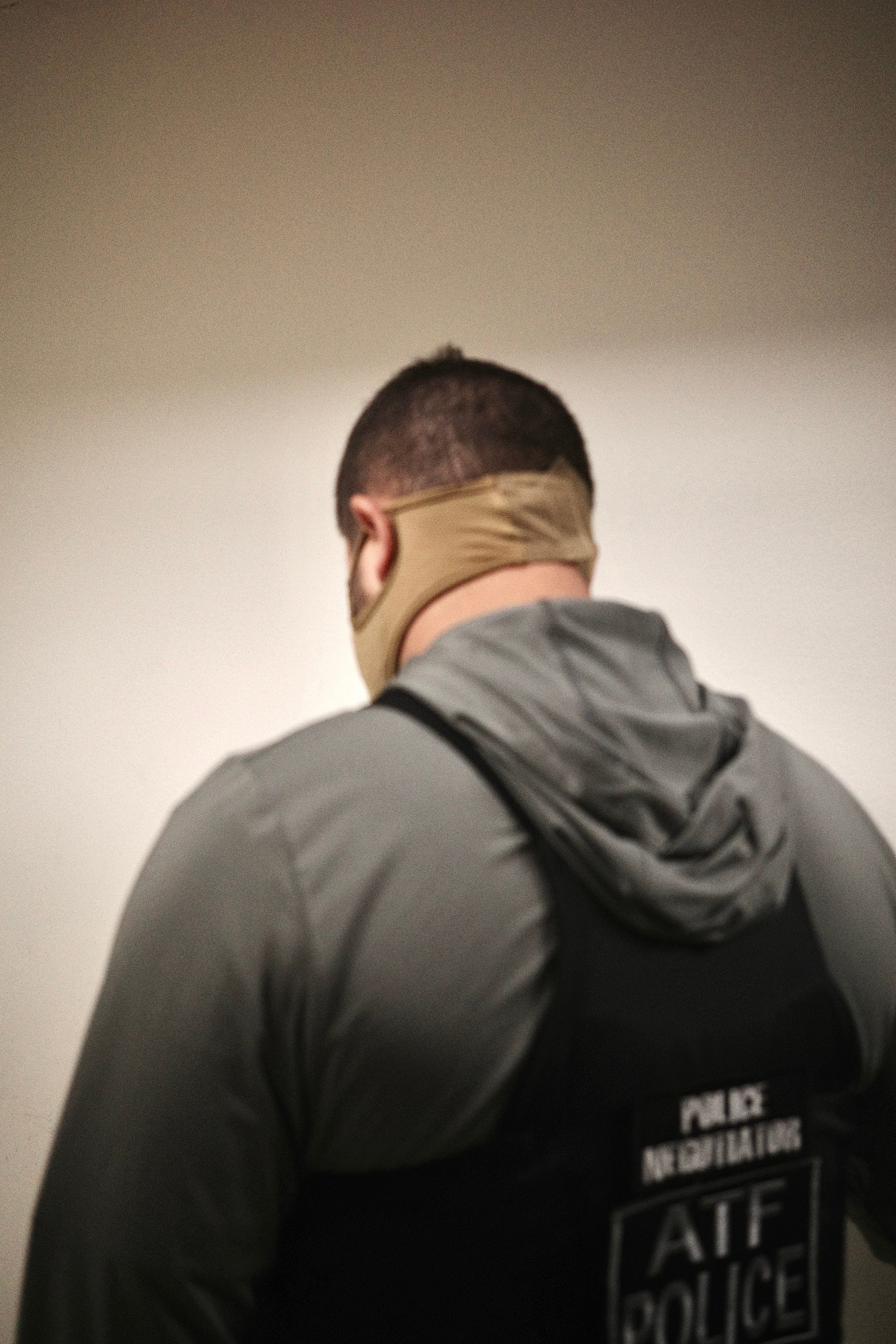
The Boy
An indigenous Central American high school student spoke with our informal group of court escorts over the phone the day before his master court hearing. Exceedingly polite and well spoken, gushing curiosity and gratitude, he peppered us with questions hiding his obvious fear with his natural, unforced erudition.
His brother was on the line listening, and we had a lot to say.
For the first time – after the last visceral weeks of indiscriminate detentions – we felt compelled to also discuss the suddenly very real option of him not going to his court hearing.
Up until now we had heard and knew all their harrowing stories of surviving the Darien, of the dire situations of their home countries, sometimes intimately (and their historical geopolitical origins) – but more importantly, and naively, we still believed the system worked.
It clearly doesn’t work anymore, if it ever did.
ICE didn’t care what the judges decide. They were told to detain 3,000 immigrants a day and had carte blanche on how to hit this arbitrary quota. So they took the path of least resistance – they waited outside courtrooms where asylum seekers argued for their legal asylum.
With his brother listening, we went over in detail about what we had witnessed firsthand over the last several weeks.
And like all the others before him, he insisted he still wanted to do things right.
He had enrolled and was excelling in one of the many newcomer high schools here in New York City. He had all his paperwork turned in. He was still looking for a lawyer, but unlike most of the others, him and his brother wanted to pay for one instead of expecting to get one pro bono.
He asked us how to dress. He asked us how to get his hair cut.
We reminded him that even if the judge decided in his favor, he was risking being detained and awaiting any following court appointments inside one of the numerous detentions center around the country, working for as low as $1 an hour.
He said he wanted to discuss with his other brothers. Later that night he said they collectively decided he would still go.
He just wanted to do everything right.
As it turns out, hardened criminals and lawbreakers don’t come to court voluntarily.
The Day
The boy came dressed clean, with a fresh hair cut. No tattoos, no logos, talking to his brother in Q'eqchi' - one of the indigenous languages of his country rooted all the way back to the Maya.
We met up outside the now familiar federal building with a couple of new and old volunteers. As word (and publicity images) of the mass detainments had spread, so had the community of enraged volunteer court watchers from all corners of the city.
Waiting there before anyone was one of the boy’s high school teachers.
She said she was too scared to go inside, but came to see him and support him - and perhaps say bye to him.
She said another one of his teachers was coming, who did want to go in with us but was running late. We couldn’t wait.
He hugged the teacher and brother in long lingering embraces. We went through security no different than any airports’, and up to one of the now infamous court floors.
We passed two unmasked agents camping out in the corner of the floor, with one masked enforcer behind them. The ‘undercover’ ICE agents have long stopped trying to blend in. They have their quotas and now roam the halls openly high on their freshly given authority. We pressed on and walked our escortee into the courtroom.
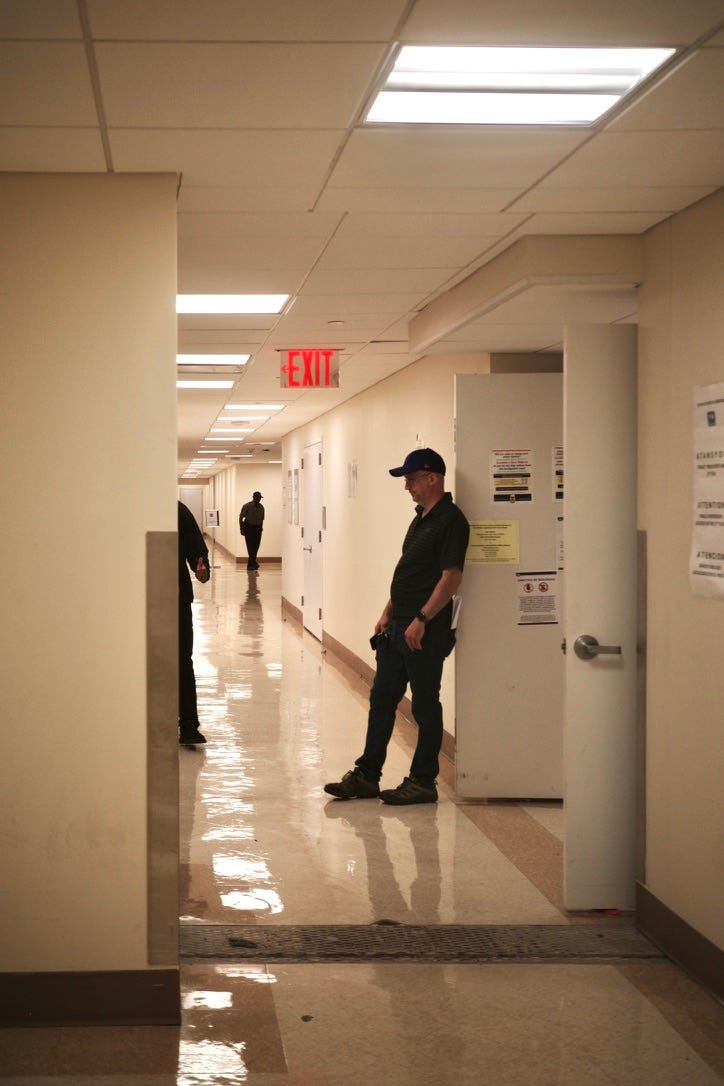
The judge seemed nice enough, all the migrants before her had their papers in order or in legal process. As it turns out, hardened criminals and lawbreakers don’t come to court voluntarily.
DHS has since changed tactics – no longer moving to dismiss each and every case, as the new strategy prioritized detainments (regardless of judgement) instead of the brazen and clearly unlawful instant deportation attempts the month before.
Everyone was given extensions for their asylum applications. We had heard no tussles outside the courtroom. It was Friday, maybe they had already reached their quota for the week.
The late high school teacher finally came into the courtroom nervously, as this was her first time.
The boy went up bravely when it was his turn. After explaining to the interpreter, adroitly, how he had no parents here, only four brothers who were pooling their money to get an attorney to finish processing his asylum application - he got up and presented a handwritten letter to the judge – thanking them for overseeing his case.
Even the court clerk was impressed. Being latino (the interpreter was online) the clerk picked up the letter and was about to read it out loud, but the judge had already been convinced. She accepted the letter into evidence and gave him a two year extension for his next court date.
They hadn’t known a thing about him, they had just profiled him on the spot.
The Grab
The teacher sighed with relief, the veteran court escorts – some escorting court respondents since the first administration – did not.
I went outside first to look around, the hallway seemed clear. The teacher hugged the student and the other two escorts formed around him with me up front.
As we turned the corner to the elevators, a sleepy looking plainclothes officer suddenly perked up, took one look at the young indigenous looking student and just went straight for him.
“Ok guys, this one”

As he grabbed his arm around me, the other agents rushed in to break up our little defensive line and get to the boy.
Crucially - unlike all the other detainments I’ve witnessed up to this point, there was nobody with an open file with a name and photo. There was no list he was on. Nobody asked him to confirm his name. Nobody declared having a warrant for his arrest. The agent took a cursory look at this young boy on the way out and decided right then and there just to grab him.
So we stood our ground – no formal arrest declaration, no obstruction of justice. If you can still call it that.
His teacher erupted into tears. The other accompanying escorts instinctively grabbed me to form a human chain around the boy shouting ‘what are you doing??” Which is fair question, as there was zero communication beyond just “get him!”.
A surreal tug of war happened between us and the ICE agents, swaying back and forth, the teacher howling, as more ICE agents arrived and tore the boy away from us. Throughout it all, the boy stood straight as an arrow, somehow keeping stoic and dignified as all order collapsed around him.
Then the shouting really started.
“HE’S JUST A BOY!”
“HE’S AN UNACCOMPANIED MINOR!!”
“HE GOT AN EXTENSION FROM THE JUDGE!!”
None of it mattered – they whisked the boy away to the back room.
They hadn’t known a thing about him, they had just profiled him on the spot.
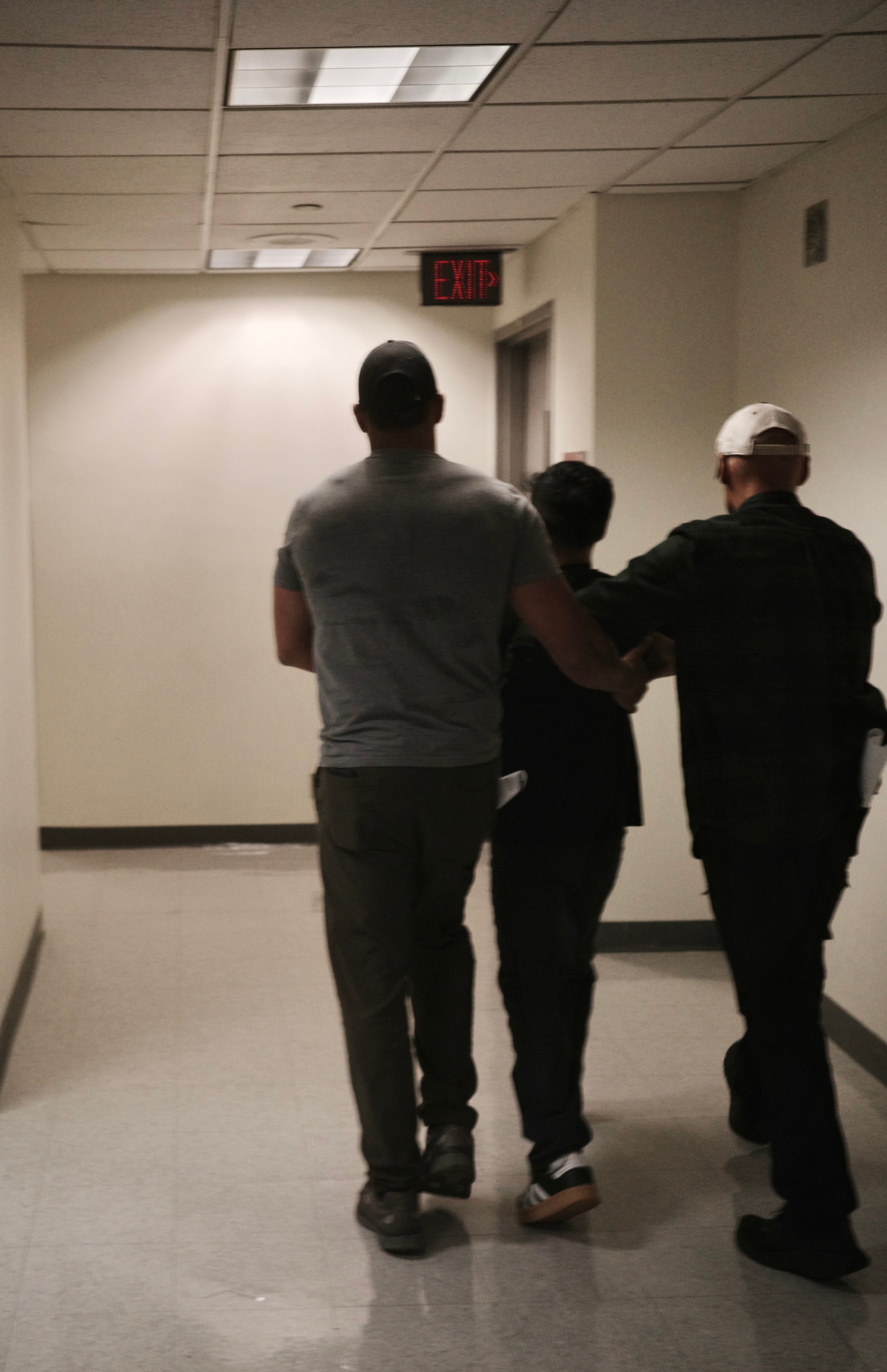
We stayed in the hallway pleading our case. One of the veteran leaders of the anonymous group had done all the due diligence beforehand, tenaciously repeated his special unaccompanied minor status over and over again shaking his documents in their faces.
They hadn’t known a thing about the boy, they had just profiled him on the spot.
I just looked at the most senior ICE agent on the scene, an older looking latin man in his late 50’s, and straight shamed him relentlessly in spanish. Unlike all the new young rambos, he looked like his tenure at ICE long predated the current administration and he looked tired. Each question I asked about him and what he was doing seemed to hit his soul directly. He was surely counting his days to retirement – and his pension.
After some long minutes of this, after finding out how old he really was, one of the agents darted out from the backroom.
“Where are his papers??” Clearly frustrated. “His teacher is here? Where is she??”
The sobbing teacher raised her hand. “Come with me.” Ripping the boy’s document file off a desk with intense consternation.
They disappeared back into the backroom as our hallway protest continued. A giant masked bodybuilding agent came out and whispered to the older, defeated latino agent I had been busy shaming.
“This is what you do for a living? Kidnapping kids?” I shot directly at the young masked linebacker agent.
“Man, you don’t even know what we did with him” he shot back at me.
They had fucked up - and they knew it.
“You let him go??” Silence. The older latino agent gave some small semblance of a nod.
“They let him go!” I yelled to the other escorts, “let’s get out of here.” We were here for the boy, not to try and teach ICE agents futile lessons on morality.
The Aftermath
The boy texted us he was out, and what corner he was on. We rushed out of the building to meet him.
He was on the corner in front of Federal Plaza, shaking, tears running down his face. His four brothers all showed up to collect him, shaking, all with tears running down their faces.
We instinctively hugged after such an intense ordeal, him and his brothers thanking all of us profusely. We were all still changing gears from what we thought was a grim and certain inevitability, to being just immensely happy he was out and with his family.
The teacher who went up was nowhere to be found. The other high school teacher who didn't go up told us she was severely distraught – rightfully so – and went to a nearby coffee shop to adrenaline dump. It was her first time, and the last time, she said.
Apparently, ICE had tried to blame us, the escorts, nonsensically, for his capture. After finding out his age and status as a special unaccompanied minor, they had told the teacher in the backroom that they had “only wanted to ask him questions”, but she was right there with us when they grabbed him violently without asking for his identity or his papers. Maybe they thought because she was new that she would believe that that’s how ICE operates, but that’s not their playbook – there’s not even a “by the book”, not anymore.
We were all shaken up that day, obviously no one more than the boy and his brothers. Who knows how long that traumatic imprint might last, or how deep it will be.
The teachers were impacted too, taking time from work to vouch and look after the boy, just to see how exactly ICE does things firsthand. They teach at one of the dozens of newcomer schools in the city, with hundreds of migrant students now waiting for their own court appointments under this new regime.
Now they too have will have to gear up for this new reality.
